
An EDR that lives inside the operating system
Smartphone users have no administrative privileges over their own devices, so no app store product can watch what an attacker does to the kernel. Zeus Shield therefore ships as a full operating system with protection built into every layer, from the kernel up to individual apps.
kzeus
A kernel module that gives Zeus memory APIs and kernel-level coverage. It works as ground truth for memory maps, catches raw svc syscalls that bypass userspace hooks, and checks kernel integrity.
zeusd
The main privileged process. It correlates every signal on the device and decides what counts as a threat. It is the only process kzeus will accept privileged requests from.
Zeus Sensor
A small native module injected into processes of interest. It uses PLT/GOT and inline arm64 hooks to see mmap, mprotect, ptrace, dlopen and other calls from inside the process.
Zeus App Sensor
A sensor for apps and the Android Java/Kotlin framework. It watches accessibility, overlays, dynamic code loading and permission abuse.
Detection at every stage of the chain
zero-click (IM)
- Media rendering hooked and sent to an isolated rendering sandbox
- Hardened decoders built with ASAN and UBSAN
- Allocation APIs instrumented to emulate sanitizers in closed-source libraries
- Detects exploit payloads, odd section, bitmap and header ordering, and spoofed extensions
- Restricts code loading and post-exploitation inside IM apps
Browser exploits
- Injected into the Chrome V8 renderer to detect JavaScript object corruption
- Code-loading restrictions block code execution even when an attacker has memory primitives
- Crash telemetry for every tab
Sandbox escapes
- ROP, JOP and COP control-flow hijack detection in the Chrome main process
- Integrity checks on objects that sandbox escape exploits commonly target
- Corruption detection in privileged HAL processes
- Extra patches in the Chrome GPU process
- Every suspicious crash is caught and reported
Kernel exploits
- kzeus detects heap object corruption, page-table corruption and memory primitives
- Kernel state checks for SELinux tampering (
enforcing,avc_cache) - Hardened kernel with
RANDOM_KMALLOC_CACHESandSLAB_VIRTUAL - Live monitoring of kernel
WARNmessages and crashes
Anti-Implant
- Regular filesystem sweeps for implant leftovers
- Zeus Sensor in
system_server,zygote,voldandinit - Detection of in-memory code (W→X) and anonymous executable memory
- Detection of ptrace,
/proc/pid/memand reflective ELF injection - App Sensor in WhatsApp, Telegram, Signal, Teams, LinkedIn, X and Chrome
Anti-Trojan
- Static analysis of every installed app: manifest, permissions and native libraries
- Matching against known IoCs and trojan signatures
- App Sensor runtime analysis in every unsigned app
- Detection of accessibility abuse, overlay phishing, OTP theft and hidden VNC
Runs on Google Pixel
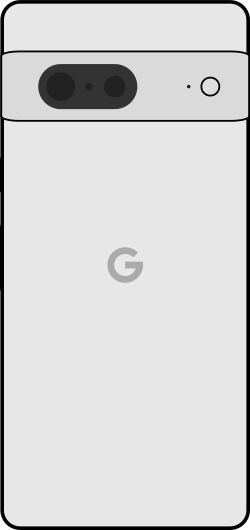 Pixel 77 · 7a
 Pixel 88 · 8a · 8 Pro
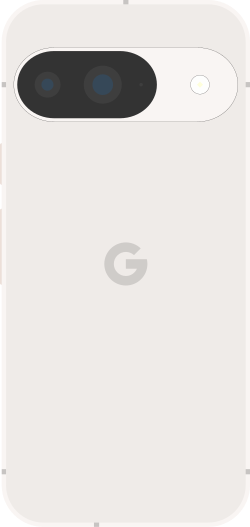 Pixel 99 · 9a · 9 Pro
9 Pro XL · 9 Pro Fold
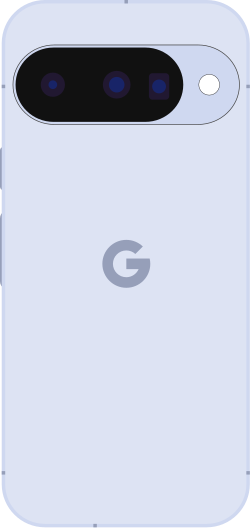 Pixel 1010 · 10a · 10 Pro
10 Pro XL · 10 Pro Fold
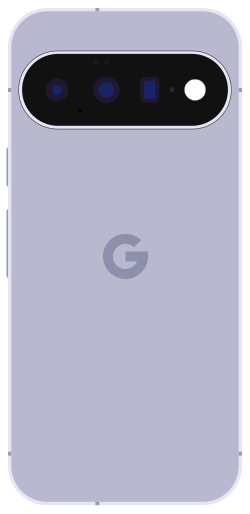 Pixel 1111 · 11 Pro
11 Pro XL · 11 Pro Fold
Phone images: Mliu92 (Pixel 7–10), DM115Wiki (Pixel 11) · Wikimedia Commons · CC BY-SA 4.0, resized